Uncategorized

Tolstoy’s Gerbil

From the continuation of our ongoing “What Would Julian Barnes Do” series, some quotes from his Paris Review interview:

INTERVIEWER
You already were a very good essayist and journalist before you started to write fiction. Why did you choose fiction?

BARNES
Well, to be honest I think I tell less truth when I write journalism than when I write fiction. I practice both those media, and I enjoy both, but to put it crudely, when you are writing journalism your task is to simplify the world and render it comprehensible in one reading; whereas when you are writing fiction your task is to reflect the fullest complications of the world, to say things that are not as straightforward as might be understood from reading my journalism and to produce something that you hope will reveal further layers of truth on a second reading.

That’s right, Julian Barnes! You tell ’em!

INTERVIEWER
…don’t people always like to try something new?

BARNES
It doesn’t work quite like that. I don’t feel constrained by what I have written in the past. I don’t feel, to put it crudely, that because I’ve written Flaubert’s Parrot I have to write “Tolstoy’s Gerbil.” I’m not shut in a box of my own devising. When I wrote The Porcupine I deliberately used a traditional narrative because I felt that any sort of tricksiness would distract from the story I was trying to tell. A novel only really begins for a writer when he finds the form to match the story. Of course you could play around and say, I wonder what new forms I can find for a novel, but that’s an empty question until that proper idea comes along, and those crossing wires of form and content spark. For instance, Talking It Over was distantly based on a story that I’d been told five or six years previously. But it was no more than an anecdote, a possibility, an idea for an idea, until I apprehended the intimate form necessary for this intimate story.

I like the idea of form and content like crossing wires.

Both quotes from “The Art of Fiction No. 165: Julian Barnes,” from the Paris Review.

Standard
Uncategorized

one last barrage of Wroclaw-photography

I just got a confusing phone call from the Wroclaw DHL office, telling me that I had valued a recent package too highly, and that they had to put a lower value on it in order to send it. I agreed to everything, being in no condition to disagree. “Whatever you say, Poland” is the only possible response to all these situations.

Anyway. Still going through all the pictures from the last trip. I took these photos on Halloween.

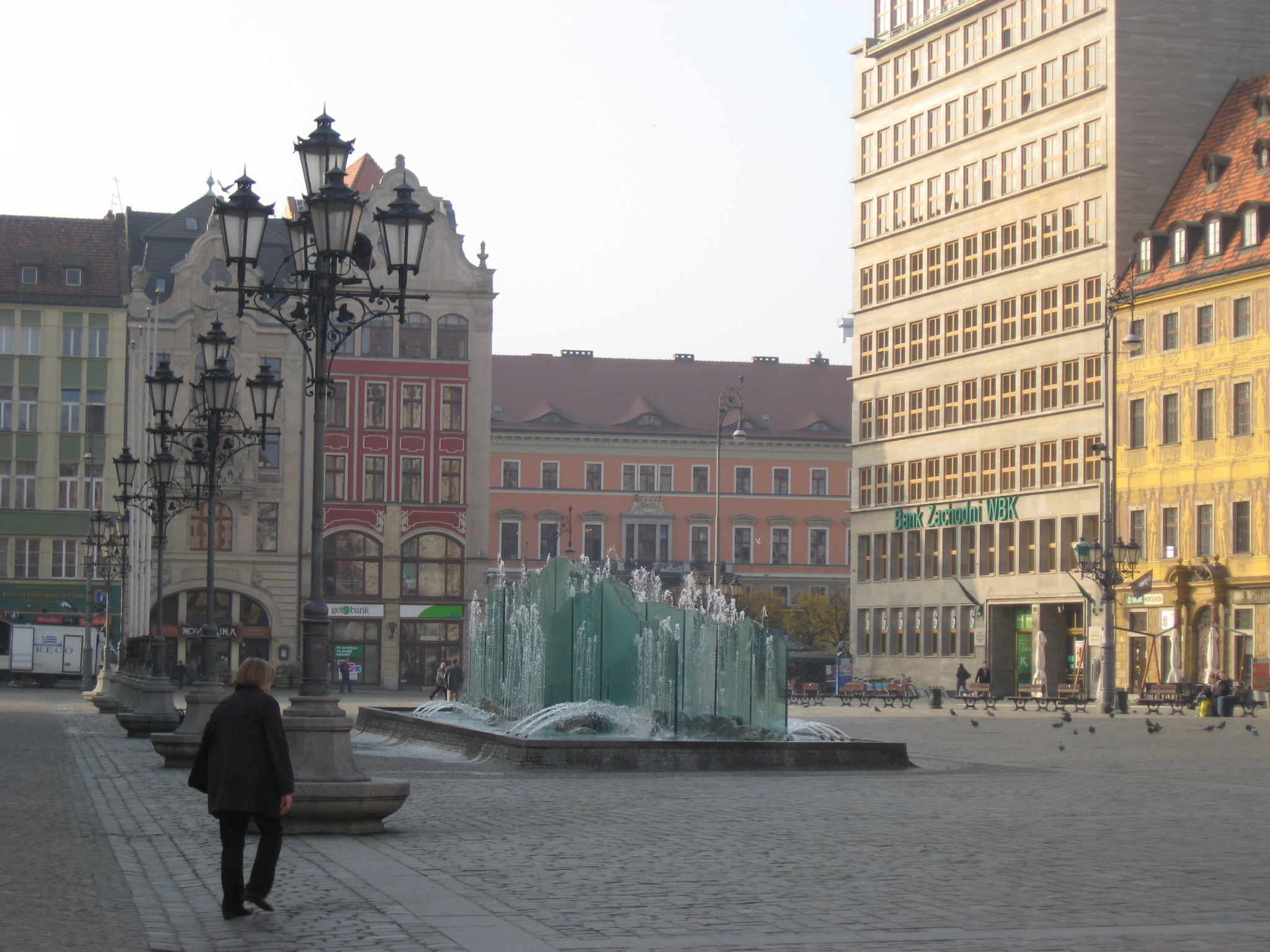
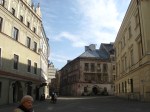
The Rynek on a quiet empty morning. It's about 8:45 AM, nothing is open, and I'm pacing back and forth in front of the Empik bookstore.

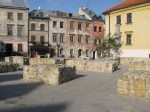
That fountain, along with “In front of the Pizza Hut” or “In front of the McDonalds,” is one of the three reliable meeting places for groups of lost Americans in the Wro. Rynek. Everywhere else is really confusing.

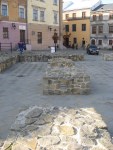
The two little houses at the front are the oldest in the Rynek.

I really like how much more enormous the tower behind is…

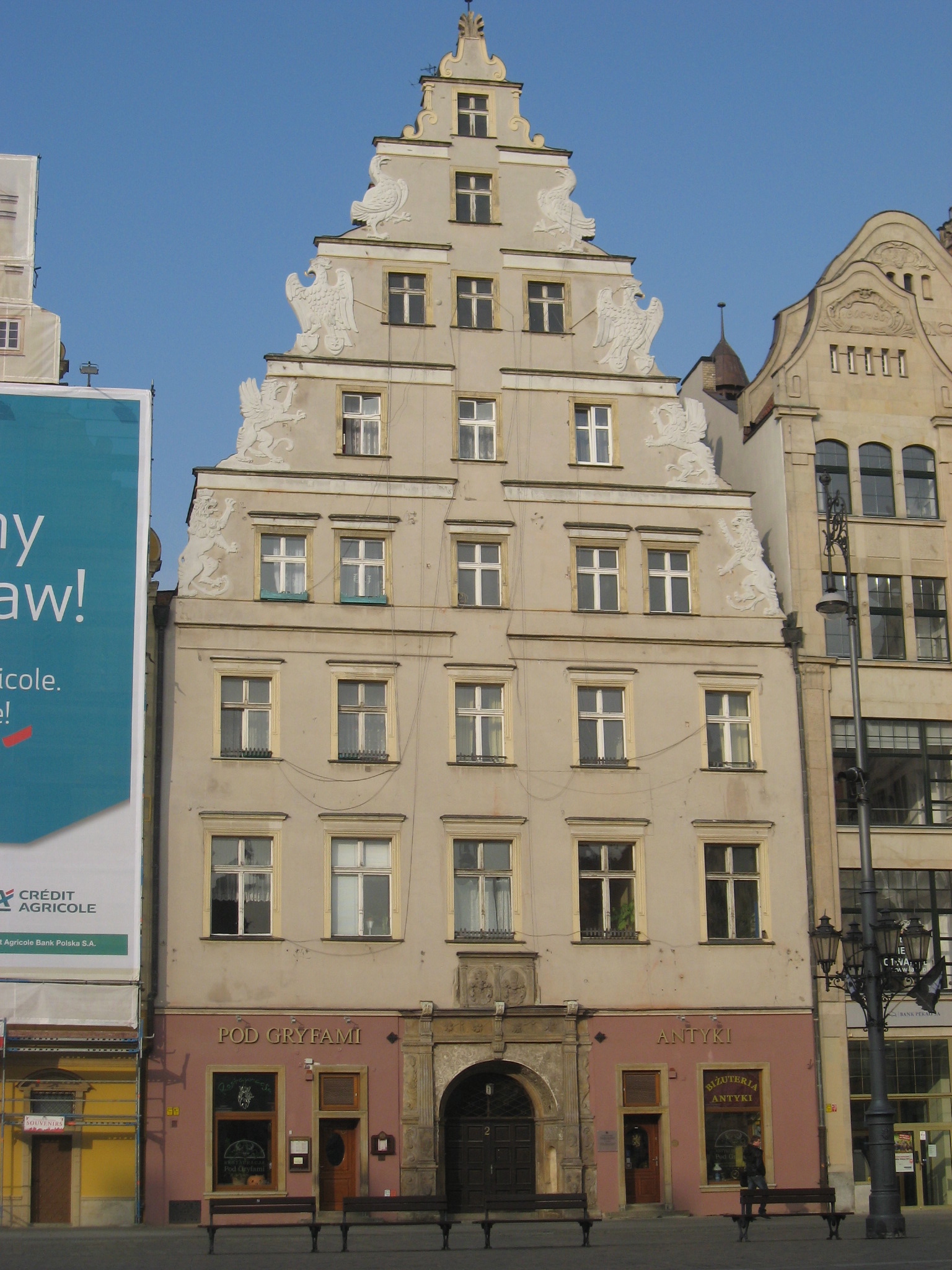
"Pod Gryfami"--Under the Gryphons.

A less modest house in the Rynek; one of my favorites.

GRYPHONS!!!

Standard
Uncategorized

Henry, who had not written a line of verse since youth

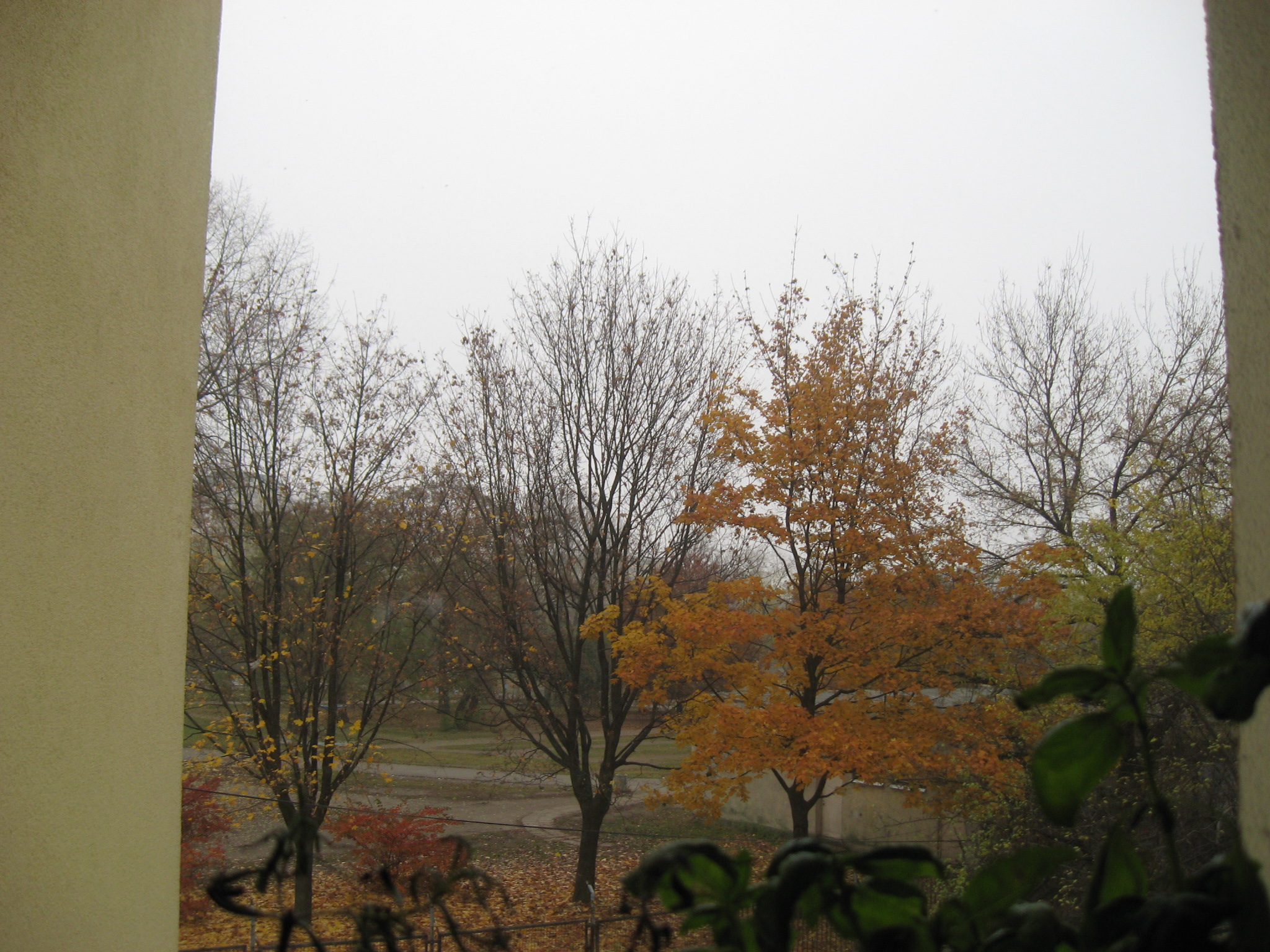
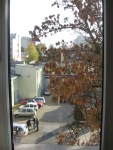
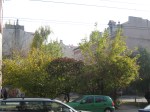
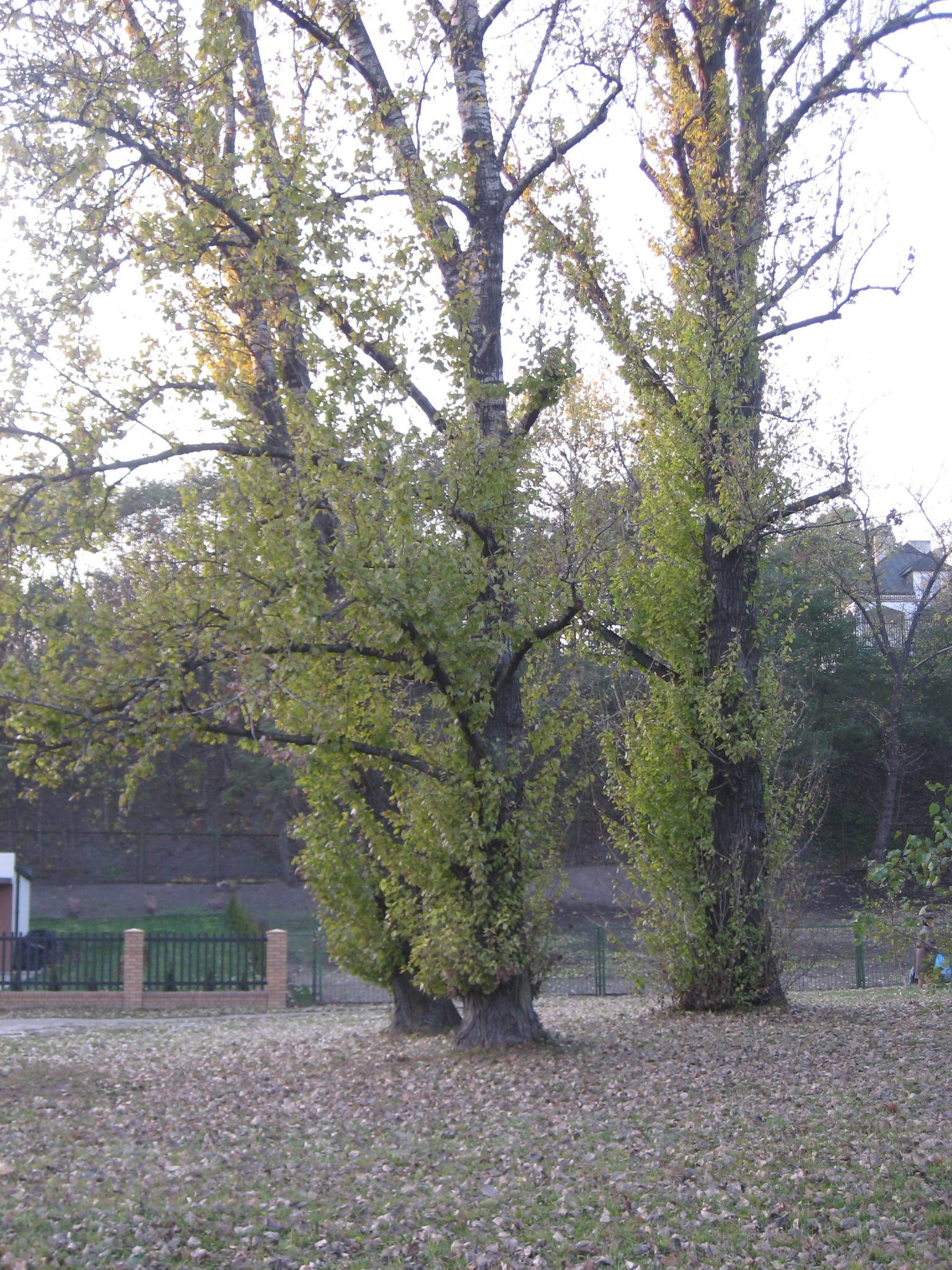
It is lovely to have a few days in Warsaw. As you can see from this photograph, through the kitchen window of the Praga apartment, two of the three trees I see every day have lost all their leaves.

Trees from kitchen window, with dying herbs in foreground.

I was a bit exhausted yesterday from the recent round of traveling, but maybe that is to be expected. If I have class Tuesdays and Thursdays, and spend every Friday through Monday traveling all over the country, well then, Wednesday has to be the day off. It feels self-indulgent, but there has to be at least one day a week off.

I finished reading David Lodge’s biographical novel Author, Author, about Henry James, today. My parents sent it to me a few weeks ago but I have only finished it now. It was lovely–especially poignant for someone like me who is also embroiled in theatrics. I can’t help but feeling that James’s condescension towards theater is a large part of why he never had any real success in the form. At the same time, I feel sorry for his sufferings at its hands.

Here are a few quotes:

“He [James] had endeared himself to them [the actors] by providing refreshments. Shocked to discover that they were expected to rehearse from ten in the morning to four in the afternoon without sustenance, and feeling not a little peckish himself on these occasions, he arranged for Mrs Smith to prepare daily a hamper of sandwiches and other cold victuals which her husband delivered to the theatre at noon, and from which Henry invited the actors to help themselves when they were ‘off’. Miss Robins remarked that it was the first time in her experience that a playwright had thought of feeding his company.” (p. 134)

A hamper! A hamper! So British right now! Also, did anyone else hear that line as “first time…that a playwright had thought of EATING his company? Just me?

“Just before he [James] was finally, finally finished with The American [the theatrical adaptation of the novel of the same name] he heard again from Daly, who wanted more cuts and revisions of Mrs Jasper and asked if he could supply an amusing piece of verse in rhyming couplets for Ada Rehan to recite at the end of the play, a la Restoration comedy. Henry, who had not written a line of verse since youth, was dismayed by this suggestion, but, perceiving in these demands that the New York production must be imminent, gamely composed a pretty, genial, graceful speech in rhythmical prose for the purpose…” (p. 165)

I’d like to see that “rhythmical prose” speech. The idea of Henry James writing any kind of verse is horrifying.

“Decorum in the ordinary as well as the literary sense of the term required that the fictitious author [Dencombe, in a James story called “The Middle Years”] should be denied this happy consummation. Dencombe must die at the end of the story, in his middle years, his life’s work incomplete. Imagining himself in this plight Henry summoned up a deathbed speech of such poignancy and eloquence that it brought tears to his own eyes as he penned it: ‘ “A second chance–that’s the delusion. There never was to be but one. We work in the dark–we do what we can–we give what we have. Our doubt is our passion and our passion is our task. The rest is the madness of art.” ‘” (p. 168)

But in spite of all temptations…
to-wards happier con-su-mmay-tions…
he remains an ENGLISHMAN…

(those James “madness of art” lines are the epigraph for the entire Lodge novel)

and the last one, a real punch in the stomach:

“…it was just as well that she should be under no illusions as to his real feelings. About some things they communicated more honestly through their fictions than in their conversations.” (p. 169)

Oh, snap! All quotes from Author, Author, by David Lodge (2004).

In other theatre-variety news, I’m very, very happy that Cherrie Moraga’s Kickstarter for “New Fire” has come through. I’m also very happy that M. Hilyard, P. Ward and D. Sanders are previewing tonight in J. Wright’s HAVE YOU SEEN ALICE? at NOTE. I hope they have a brilliant run.

Standard
Uncategorized

bring out your theatre

Some important things are happening in the great state of California.

First, please consider supporting playwright, activist, and writer Cherríe Moraga’s Kickstarter for her new play, “New Fire: To Put Things Right Again,” if you can. They’ve raised $26,100 of their $26,500 goal, with only 36 hours to go.

Production still for NEW FIRE from Brava! For Women in the Arts.

I try not to ask for $ on behalf of theatrical productions often, because if I did I would be doing it every day, but this is a really extraordinary project. If I had found out about it earlier, I would have been hyping it earlier–but we’re down to the wire now, and they really need that extra $400 or they won’t make the full goal. You know how KS is–all or nothing.

http://www.kickstarter.com/projects/419411661/new-fire-to-put-things-right-again/widget/card.html

I was lucky enough to study playwriting with Moraga in college, which was one of the best experiences I’ve ever had. She taught me so much. I’ve donated myself and I’ve asked friends to donate on Facebook. I know these are tough times for everyone in the US, but we need art, even in tough times–and this is important art. Here’s something she wrote about the production’s development project, from the KS page:

“…collaborators held ceremonial meetings with immigrant and indigenous communities from the barrios of Chicago to the agricultural fields of California’s San Joaquin Valley in order to establish a solid community base for their explorations as theater artists.”

Here’s Moraga speaking at a UCB commencement in 2009:

Please become one of this production’s backers if you can.

In other theatre news, some of my favorite actors in the world–the remarkable Michelle Hilyard, Phil Ward, Darrett Sanders, and other NOTE veterans–are uniting in a show opening this weekend at NOTE in Los Angeles–Have You Seen Alice. Here’s the playwright:

“There is humor and hope in my play, but this time I did not allow myself a fairy tale ending. Instead I wanted to honor the fears and frailties that humans sometimes contain, to accept and acknowledge our self-imposed prisons and our inability to take the steps we long to take.”

– playwright Jacqueline Wright on her writing process, in LA STAGE TIMES for her new play, HAVE YOU SEEN ALICE?, opening at Theatre of NOTE this weekend. Free preview Thursday. Tickets here.

I’m proud of the theatre being created by artists in California, and I wish I could do more to support both of these productions. They have my thoughts and my hopes–for the fundraising, for the opening.

Standard
Uncategorized

Goodbye to Wrocław: a All Saints’ Day train-velogue

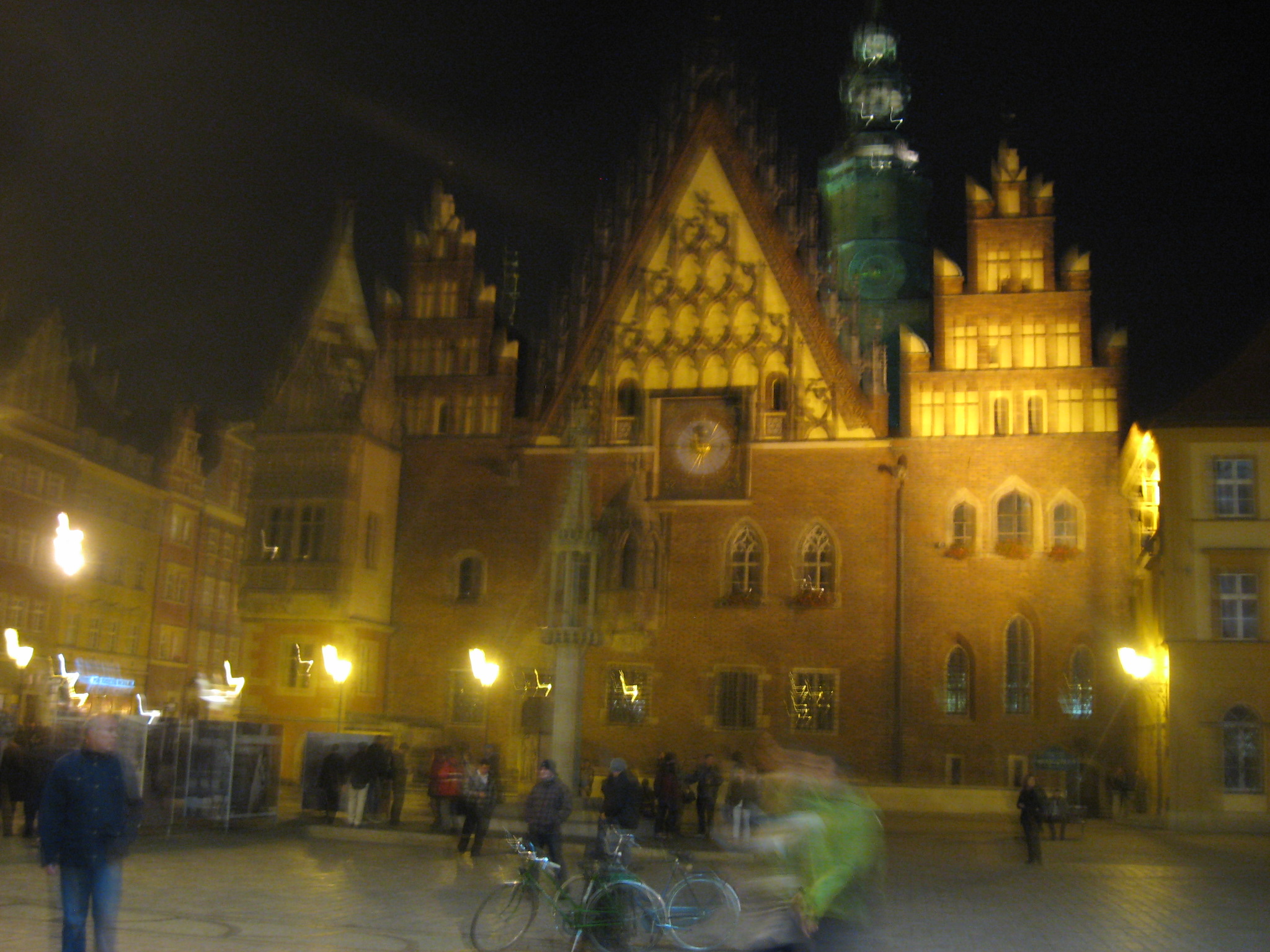
Stardate: November 1, 2011. One last blurry nighttime shot of the Facade of Contemplation in Wrocław to speed us on our way…and back on the train again, back to Warsaw. (I took this picture on the evening of Oct. 29.)

I like to stand in front of this Facade, in the Rynek, and think, whenever I’ve seen a theatrical performance that confused me. I spend a lot of time in front of it.

The first of November? Really? I’ve been in Poland for three months and ten days. I arrived early—my Fulbright window only officially started on September 15—but I got here July 20th to take some workshops with a theater in Wroclaw. They’ve been busy months. I have another 6.5 months left on the Fulbright. (Through June 15.)

Today is a Polish national holiday, All Saints’ Day, and so for the first Tuesday in many Tuesdays I won’t have language class right after I get off the train. I’ve been traveling over so many weekends that it feels like I’ve gotten into a rhythm of train-to-language class.

I’m writing this on a familiar train now, the one from Wrocław to Warsaw, and we’re speeding past the countryside. I’ll post this later, when I get into town.

Continue reading

Standard
Uncategorized

Travelogue, resumed

(I successfully located the Wrocław DHL office and sent off the papers I’d been working on–so I have some time to get back to pictures from last week.)
Stardate: last czwartek, 27 października. Befuddled Expat’s Log. Upon returning from Lublin (small town) I really enjoyed seeing Warsaw (larger town) as a comparatively busy, bustling place. Like stepping from a dim room into a bright one. Look at all these people heading down to the Centrum metro station! So many people! Maybe not that many compared to New York, but more than anywhere in Lublin…

The apparition of these faces in the crowd...

I used the opportunity to take some pictures of the massive Dworzec Centralna, or Warsaw central train station, and the surrounding open squares. This area is right next to the Kinoteka, to the PKN, the Złote Tarasy mall, etc, and it has a wide-open feeling that reminds me of Berlin Alexanderplatz.

I’m in a cafe right now in Wro. and the uploader’s slow, so I’ll put those images up later…

It’s a nice place to return to, the PKN/Kinoteka/Centrum metro area, every time I come back to Warsaw.

Standard
Uncategorized

Niedziela we Wrocławiu

There couldn’t have been a better day for it to be Polish Daylight Savings Time–I stayed up till 2 AM last night putting up pictures of the Lublin trip, and the surprise extra hour of sleep is much appreciated. It’s another quiet Polish Sunday morning.

The Wrocław Rynek. Sunday morning. The square almost empty.

Now I’m in the Wrocław Starbucks on the Rynek, in the under-the-golden-stag building (pod złotym jeleniem) across from the under-the-golden-dog building (pod złotym psem).

15th-century apteka--now a Starbucks. (There's still an apteka next door, which is nice.)

I’m working on an application that is due, in the Western Hemisphere, sooner rather than later–which means I will have to use DHL so it can fly Under the Golden Airplane Airlines (pot złotym samolotem) but it’s worth it. I had an experience with some documents being lost through the regular Polish mail en route to the US, and I think I’m not going to risk it this time.

In the narrative of last week’s trip, I still have to get to Łódź–but here are a few Wrocław photos from last night and this morning. A day of writing lies ahead. I’ll put up the Łódź pictures when I’m finished with it.

Standard
Uncategorized

w Lublinie, day 2

It’s hard to know where to start with Lublin.

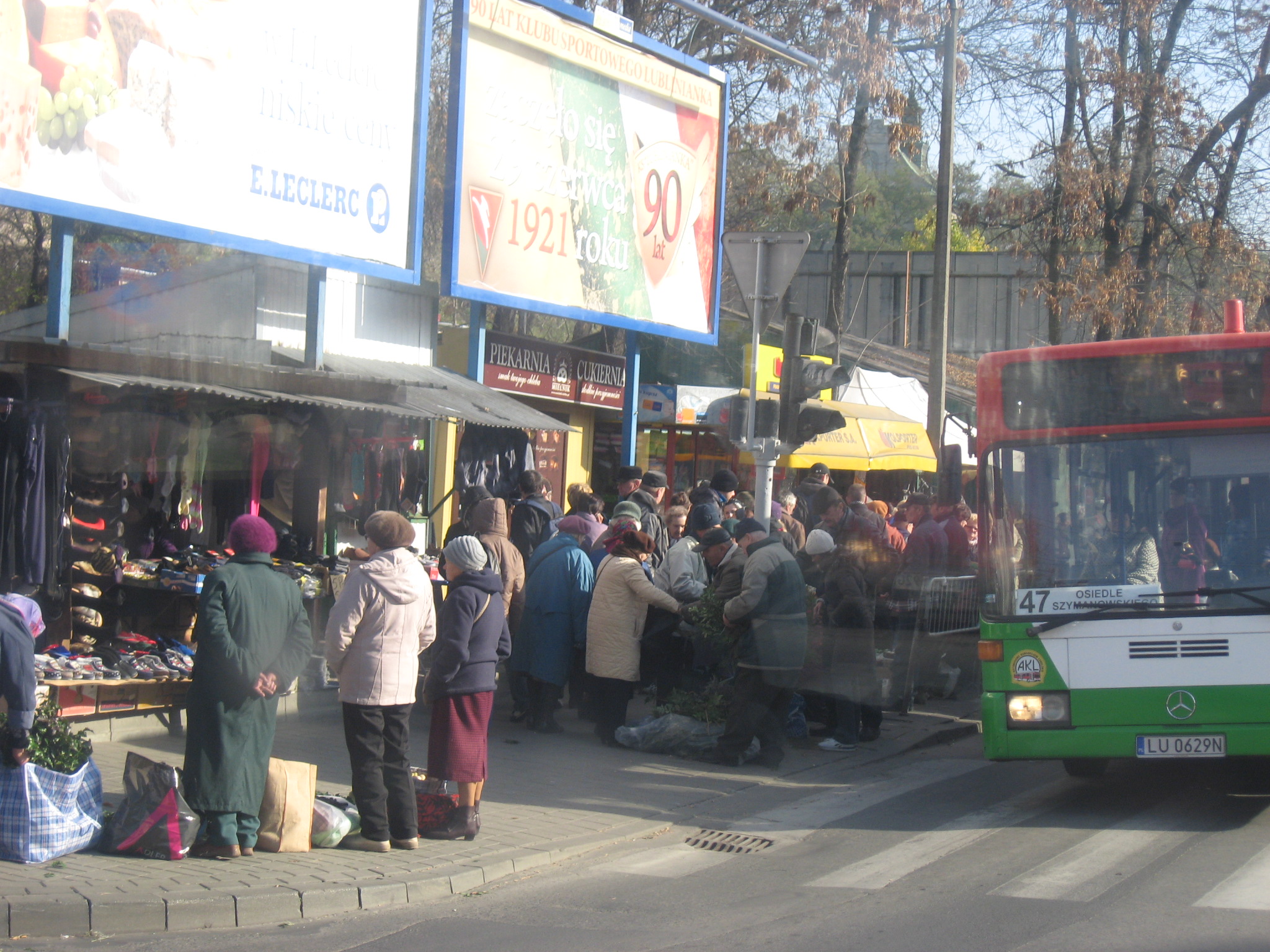
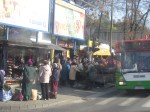
Maybe this picture of people swarming the street “bazar”…

Aleje Tysiąclecia market, on a Wednesday morning.

Or this picture of Birds Gone Wild in the Saxon Gardens, swirling and diving and showing off for an indulgent woman with birdseed.

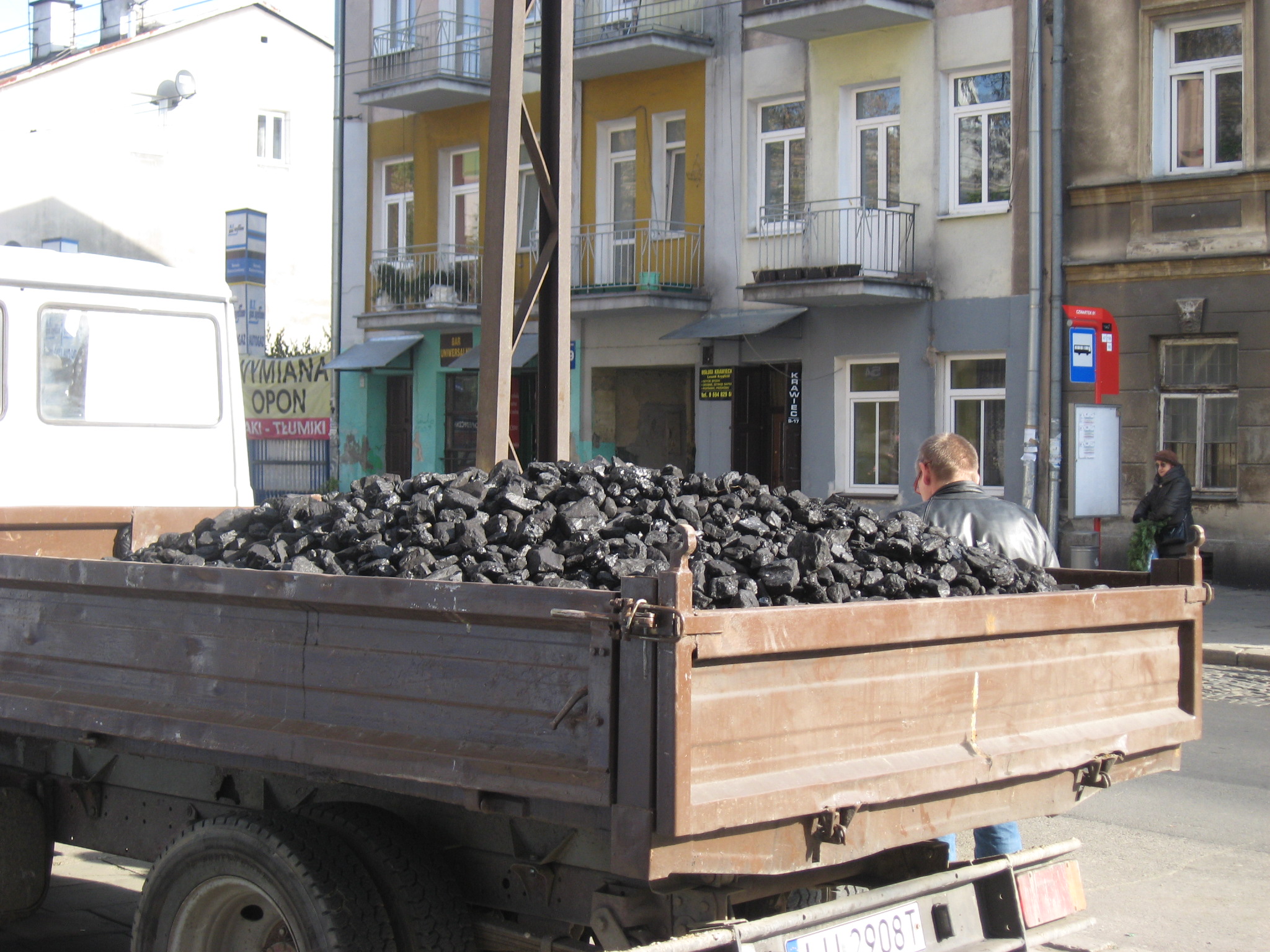
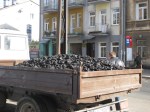
Or this wagon full of lumps of coal–yes, really, a wagon full of lumps of coal— that was outside my hostel as I walked to the bus stop, in the morning, on ul. Lubartowska.

There is nothing I can say about this image that speaks better for it than the image itself. WAGON. COAL. Witamy w Lublinie, folks.

Or all these images of my second day in Lublin, from the hostel breakfast to the morning bus-ride to Brama Krakowska to the Old Town, to the Saxon Gardens.
After this trip around town, I visited the campus of the Marie Sklodowska-Curie University, where I was on a mission to locate a) the library b) my friend A. My map led me to the wrong library–the public library–first, but I have images of both.

I did eventually connect with A., and we crashed an Erasmus student mixer for the free food. After leaving A. on her campus, I returned to the Warstaty Kultury for a play by a Czech theater company, also on the subject of climate change and its effects on the African continent.

The Czech play, like the German one, relied heavily on caricature. I was able to understand it half through the Polish supertitles, half through the spoken Czech (which sounds an awful lot like Polish) and half through the helpful whispered notes of my German friend sitting next to me.

I sat with actor friends in the lobby afterwards for some time, but was too wiped out to go out. I went back to the hostel.

The next morning, to leave Lublin, I had to get on one bus that said its destination was Majdanek (the Lublin-area concentration camp, very close to the town itself–and also just the name of part of the town) to transfer to another bus to go to my train station.

The bus was a reminder of a history I was trying to have my time in Lublin not be about, but some reminders of that history were, I think, inevitable. (There was also a moment in a Stare Miasto tourist shop where I went to buy a postcard and accidentally picked up one with images of barbed wire and human bones on it.)

The more time I spent in Lublin, the more I loved it, but the sadder I became about what had been lost. Singer’s Lublin was something I sensed around every corner in this place, but to sense something is not the same as having it be present.

At any rate, I was happy to get off that bus to Majdanek, and to board a train heading back to Warsaw, to my present life, to the present day, and to set history aside for the moment–and to crash in Praga for 24 hours, before the next train, to Lodz.

Standard
Uncategorized

w Lublinie

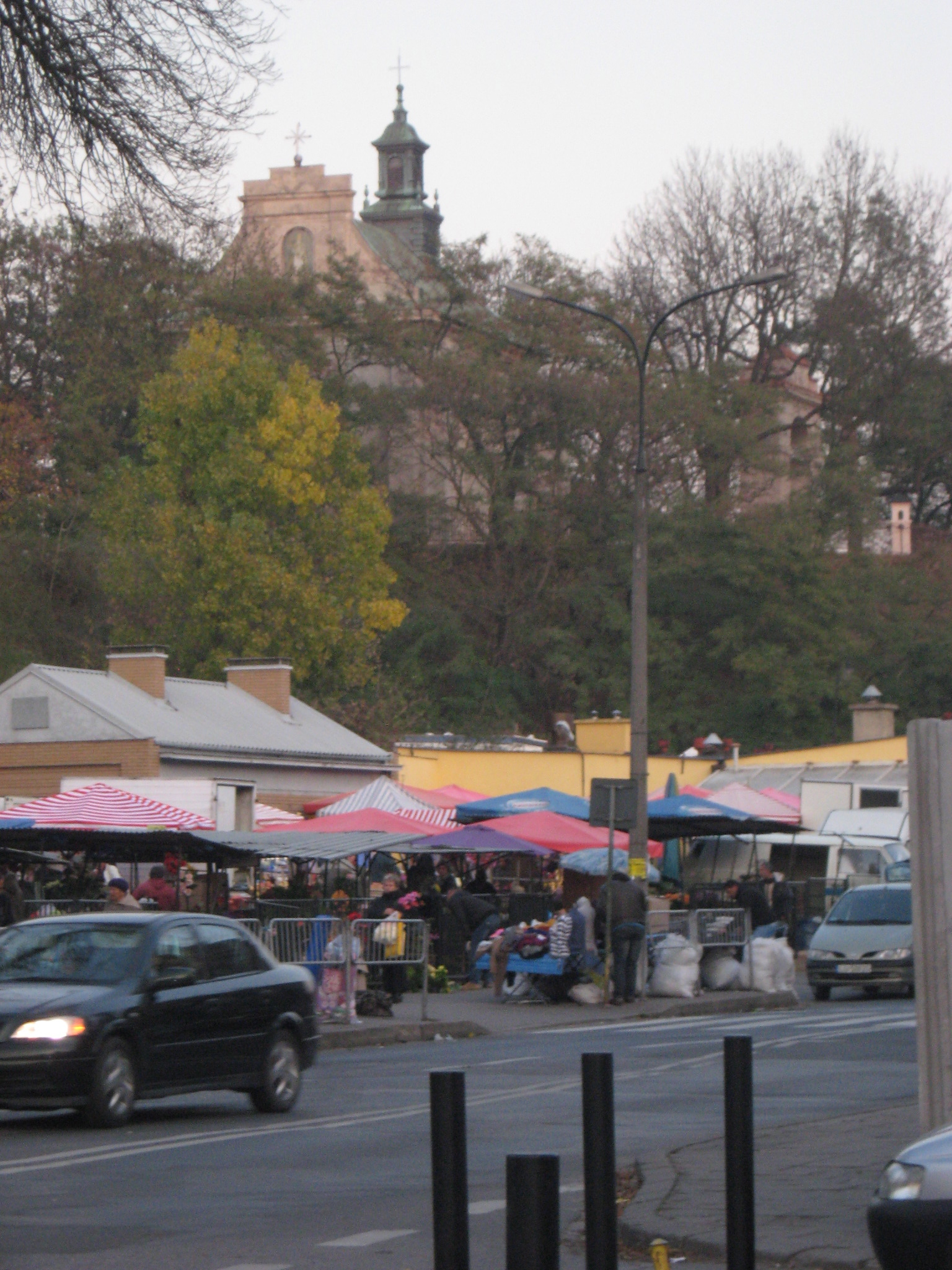
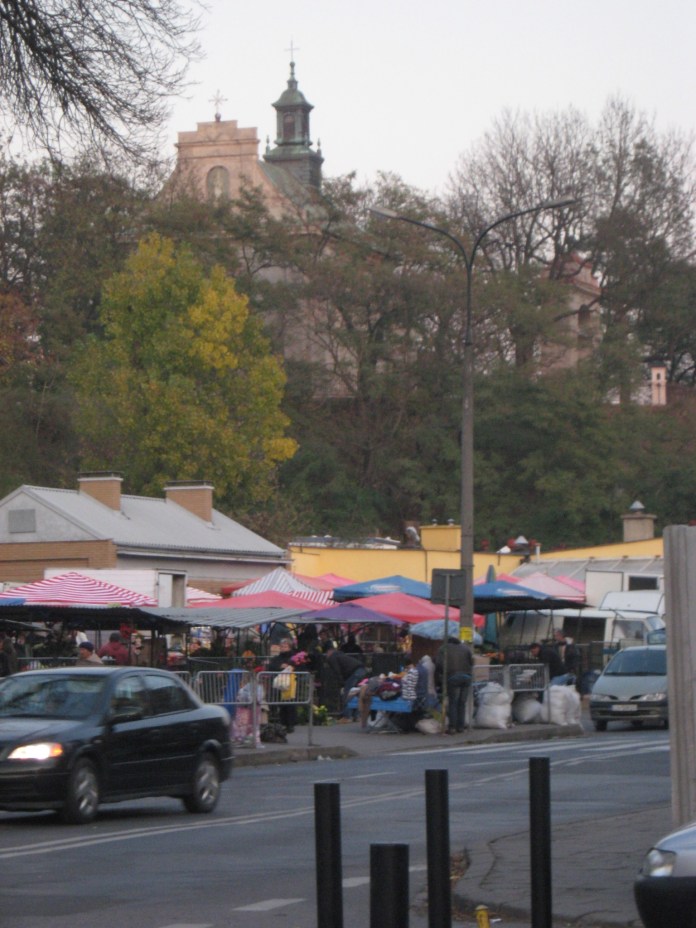
The tops of churches above; the brightly-colored umbrellas of a streetside "bazar" below. Lublin on a late weekday afternoon.

Stardate: Tuesday, November 25, 2011, and I’m on my way to Lublin for a festival of plays about climate change and its effects on the agriculture and economy of the African continent–plays created by Czech, German, and Polish theater companies. The plays are touring to the home city of each of the companies; Berlin, Brno, and Lublin. It also just happens that the German company is the Berliner Compagnie, who I worked with in 2003.

I have a very good feeling about this trip. I’ve already mentioned my obsession with Isaac Bashevis Singer’s novel “The Magician of Lublin” on this blog, but I’m going to mention it thirty more times before this blog post is over. I have such a good feeling that I don’t leave my house until one hour before the train’s supposed to leave. This, I think, as I slide into Warsaw’s Dworzec Centralna with only fifteen minutes to buy a ticket, is cutting it too close.

However, it turned out that the train to Lublin was delayed for almost 40 minutes. I must look like a good person to ask “Where’s the train to Lublin?” because a lot of people asked me.

The train itself was a smaller and less flashy version of the InterCity trains I’ve been riding between Warsaw and Wroclaw. I didn’t have an assigned seat, but there was plenty of room. I felt as if this voyage, Warsaw-Lublin, was my first new adventure in Poland. An entirely new city. No more of this bouncing between Warsaw and Wroclaw. This, I was hoping, would be the real Poland.

My roommate, the knowledgable (and Polish!) M., told me that Lublin would be colder, and she was right. From the moment I stepped out of the station, I knew the air was going to be sharper here. There appeared to be no tram stop, only lots of different buses. I knew my hostel was north of the station, but not exactly how to get there.

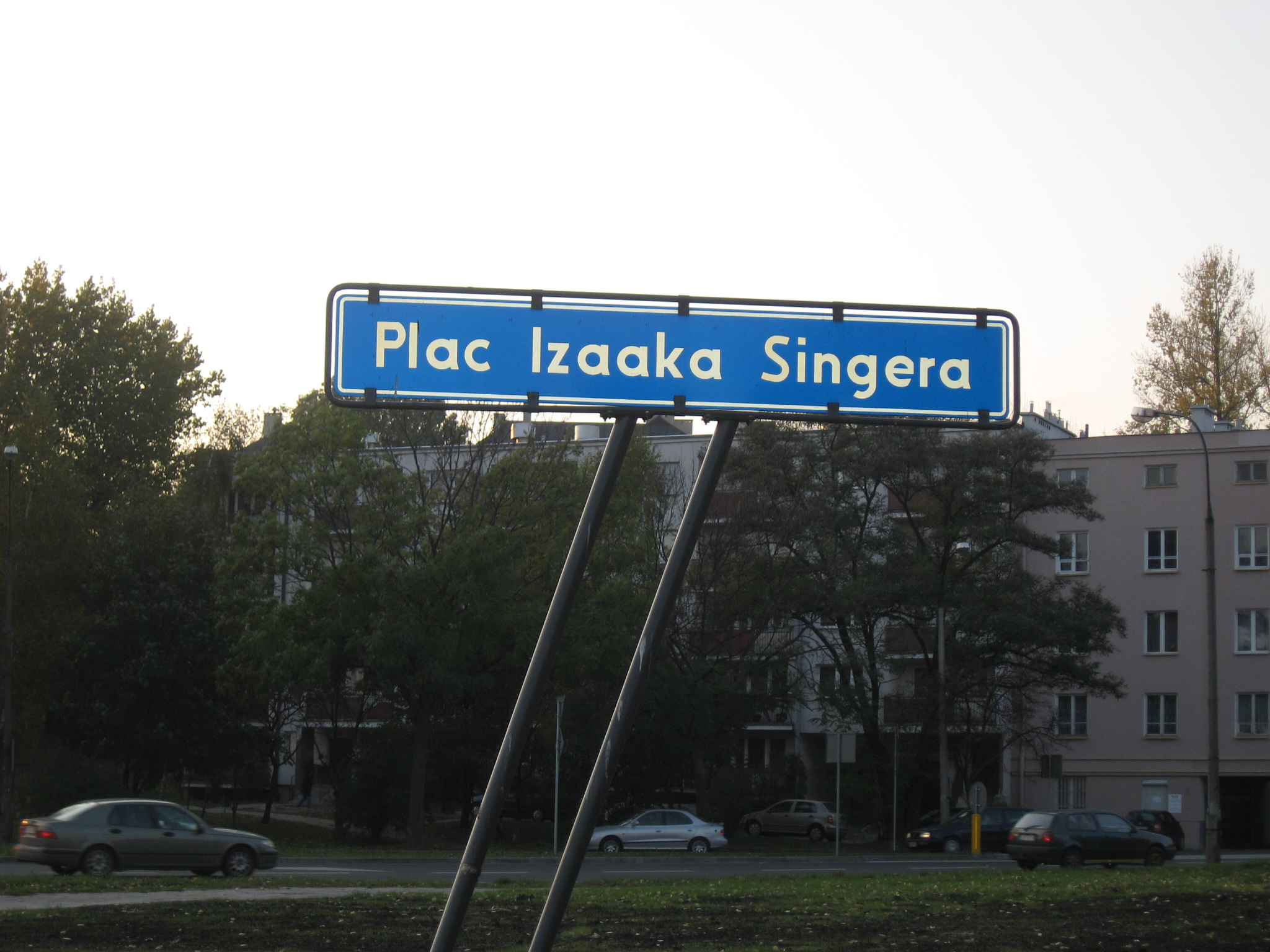
One map bought later, I found out that there was a bus stop called “Plac Singera,” for Isaac Bashevis Singer. I got really excited, and decided that whether or not this stop was convenient to my hostel, I was going there. It was…close enough.

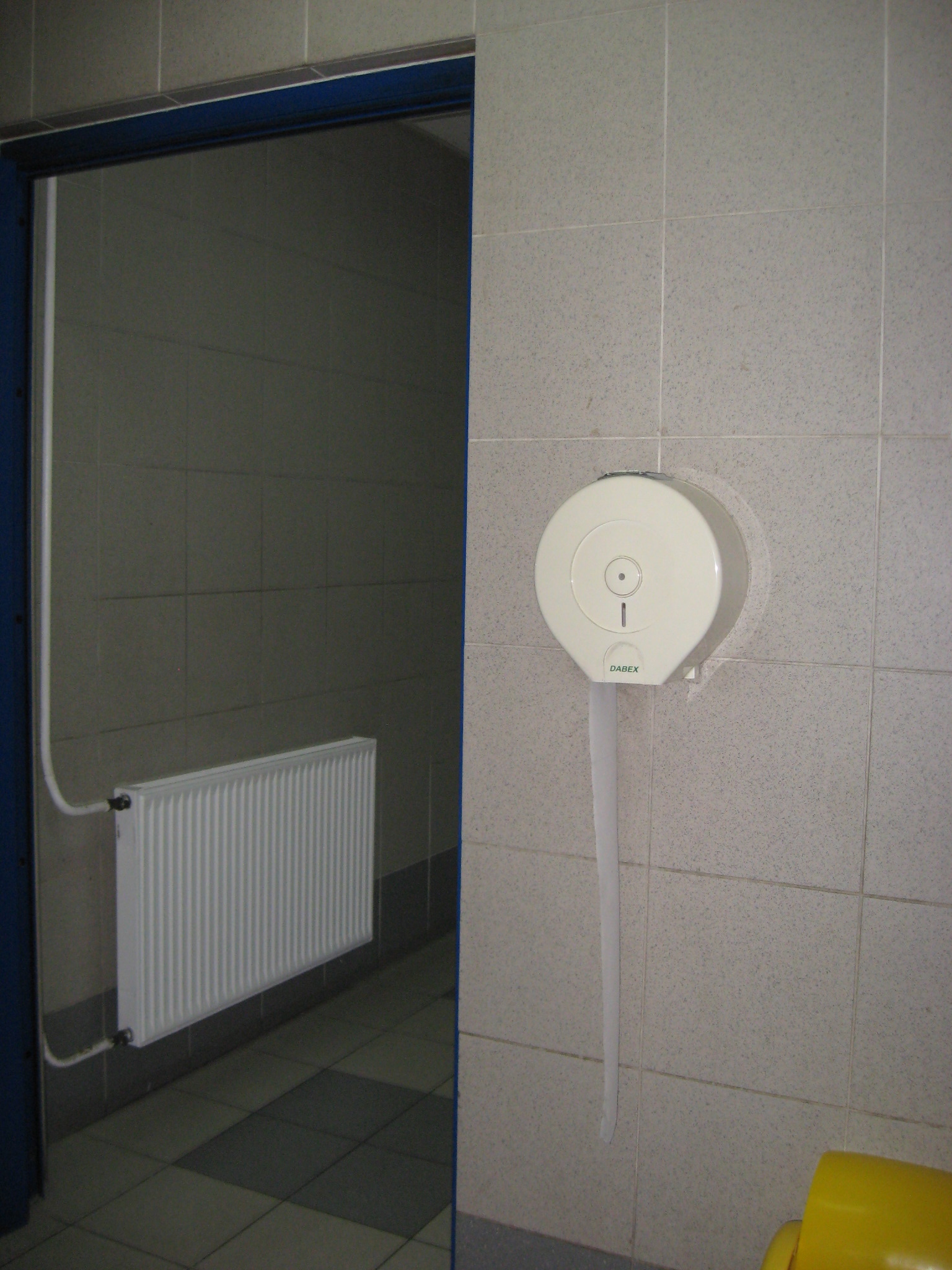
Pictures! Sorry to start with this one, but, you know…I felt some documentation was necessary.

Remember how, in Soviet-occupied countries, toilet paper was scarce? There would be one dispenser outside the stalls, and you had to take in as much as you needed. Yep. In certain parts of Poland...that is, Lublin, and other smaller towns...the citizens have not yet replaced this system. Arrrgh.

I boarded the #34 bus, along with a great number of women wearing berets, and we were off.

Along with the colder weather, the elevations of Lublin–almost every street is either going downhill or uphill–made me feel as if the place was quite a lot like Ithaca, NY. It’s also a small town, a friendly and somewhat sleepy town, and a college town. Groups of college students were wandering on and off the buses. The buses were old and rickety. Although it is still a city, and a modern city, there was enough of the slow pace and the quiet streets to make me feel that Singer’s Lublin was somewhere underneath the surface.

And I got off at…you guessed it…
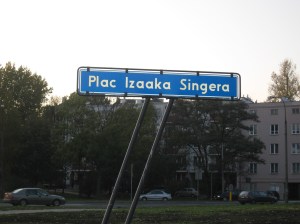
PLAC IZAAKA SINGERA!!!!!!!!!!!!!

So excited. So, so excited.
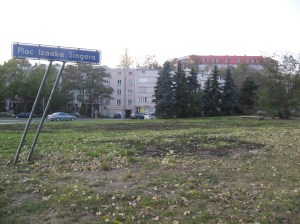
Sadly, it's just a street name, with a sign in an empty field. No statue. But still, cool.

After some wandering around Plac Singera, I made my way south towards Aleje Tysiąclecia, suitcase in tow.
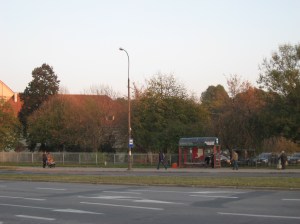
A small town, but not empty-feeling. Just small.

The streets were pretty empty, but the few people I saw seemed…like people in Ithaca, NY. A slower pace. A self-satisfied sense of “Why, yes, we DO live in a very beautiful place…and we don’t care that it’s not a big city…!” It was as if there couldn’t possibly be anything to be in a rush about.
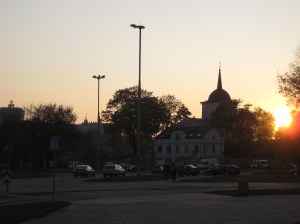
Sun beginning to go down--I arrived late in the afternoon. Should probably find the hostel...
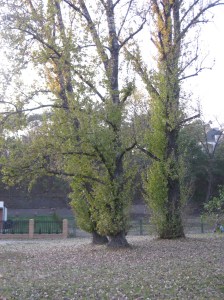
Even the trees are wearing jackets. Because Lublin is cold.

Parents playing with kids in one of the playgrounds by an apartment building. Sweatshirts, jackets.
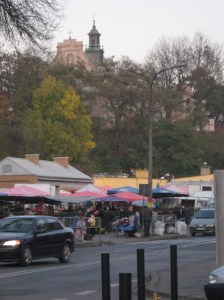
Street market on Aleje Tysiąclecia. So much elevation to Lublin--it seemed as if everywhere I looked there was something going on up high, and something else at the bottom of my field of vision. It's a town of hills, of ups and downs.

Now I'm finally on the street the hostel is on, ul. Lubartowska. This almost feels like San Francisco, heading up a steeply angled street.

I made it to the hostel, checked in, and made plans to meet up with my friend at the show.

Continue reading

Standard
Uncategorized

Fall morning in Praga, Warsaw

It's a beautiful day in the neighborhood...

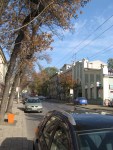
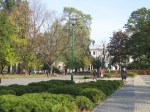
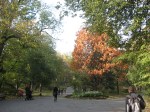
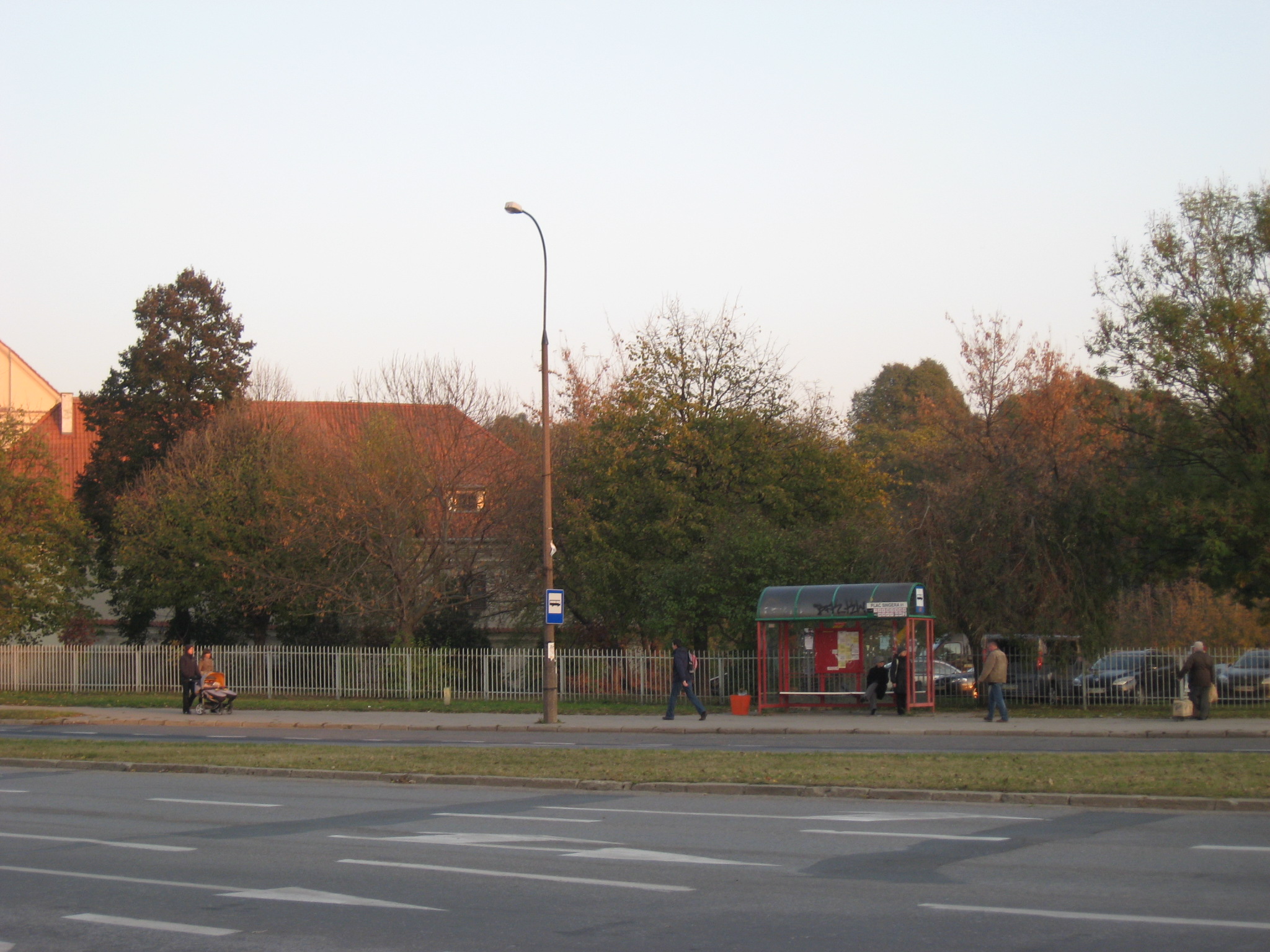
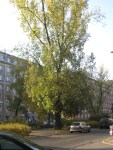
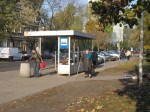
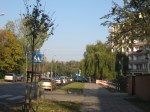
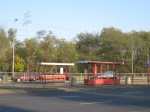
This Serene Autumnal Picture is of the walk down the wide and pleasant ul. Namysłowska, on my way south towards Plac Hallera and a busier area of Praga, my neighborhood on the east side of the Vistula.

(I’m writing this post from the kitchen of the Cinnamon Hotel, my Wroclaw home-away-from-Warsaw of choice–and catching up on blogging from a week of travel. Two days in Lublin, one in Lodz, and now three in Wroclaw to come.)

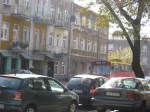
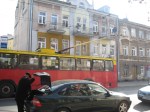
This narrative begins on Tuesday, 10/25, with a sentimental photo-shoot of the Praga neighborhood. The morning of my trip to Lublin, I finally made it to the post office at Plac Hallera to pick up a package (my parents sent me a biography of Henry James!) and on the way there and back, I thought I would document the neighborhood. I also took some pictures of the Praga-area Warsaw Uprising memorial. Photo gallery follows–you can click on one and enlarge to go through them as a slideshow.

Standard